


Over the next few weeks/ months, We'll go division by division in these “divisional check in” highlighting some data nuggets and angles we find most valuable. While not every team will get a full breakdown, we’ll touch on every team as we work through the board. As always, the goal is to match the data presented with your own ideas and intuitions in forming theses on these teams.
Let’s take a quick look at how these teams performed in EPA/play to set a rough baseline of fundamental analysis.
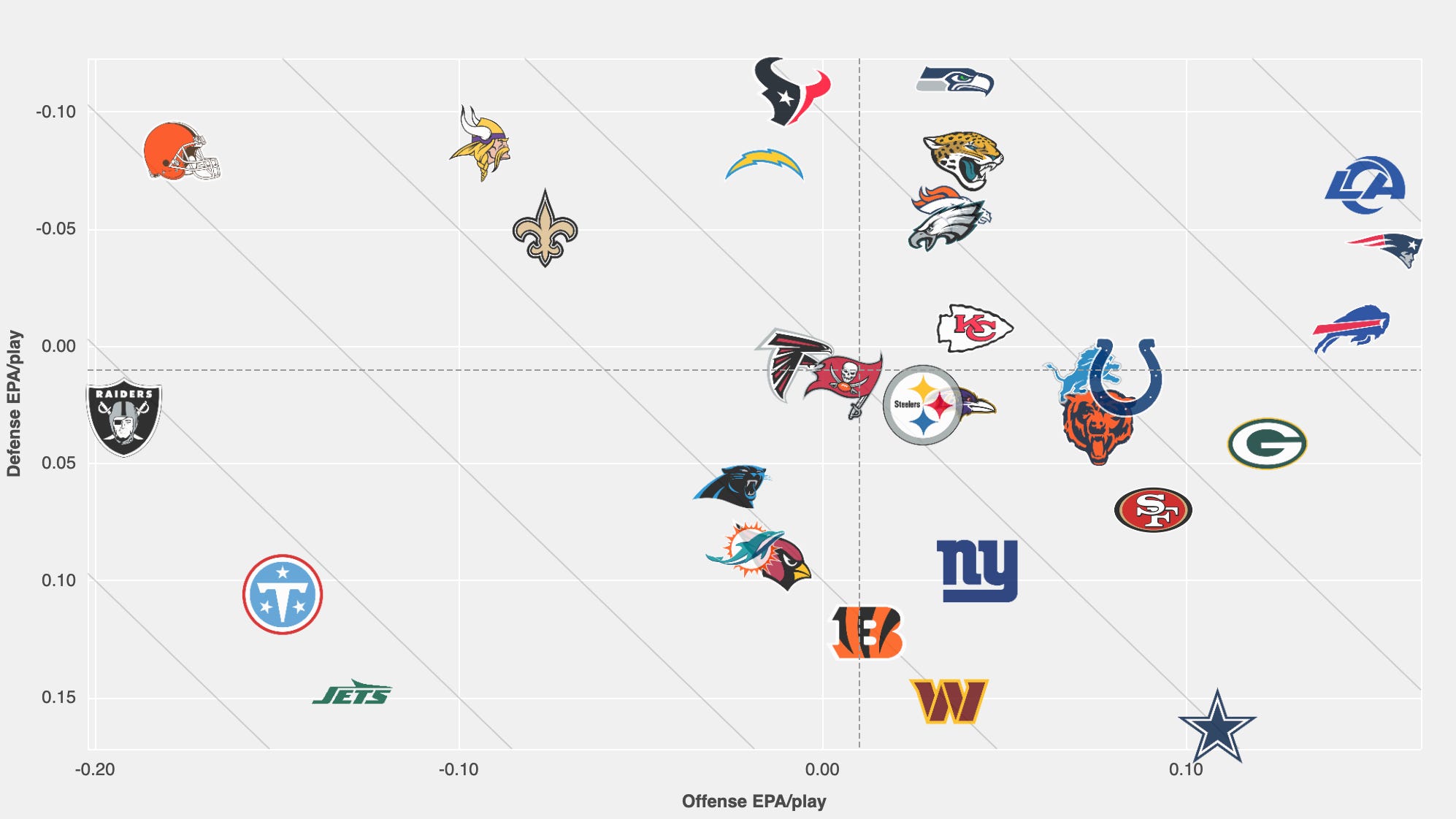
Of course, EPA is not dispositive of any success or lack thereof— but it roughly paints the picture here of a division with 3 good teams and a Vikings defense that was terrific but really struggled on offense marred by injury and JJM’s poor play. There is a reason all 4 teams have win totals at or above 500— this is a division which should be great. Let’s dive in.
Bears:
Q: Can the Offense Progress beyond potential defensive regression?
Williams took a massive step forward from year 1 to year 2, most notably in his ability to evade sacks. Williams went from a disastrous 9.7% sack rate on 26.3% pressure to sack in year 1, to a terrific 10.1% pressure to sack rate and 3.7% sack rate in year 2.
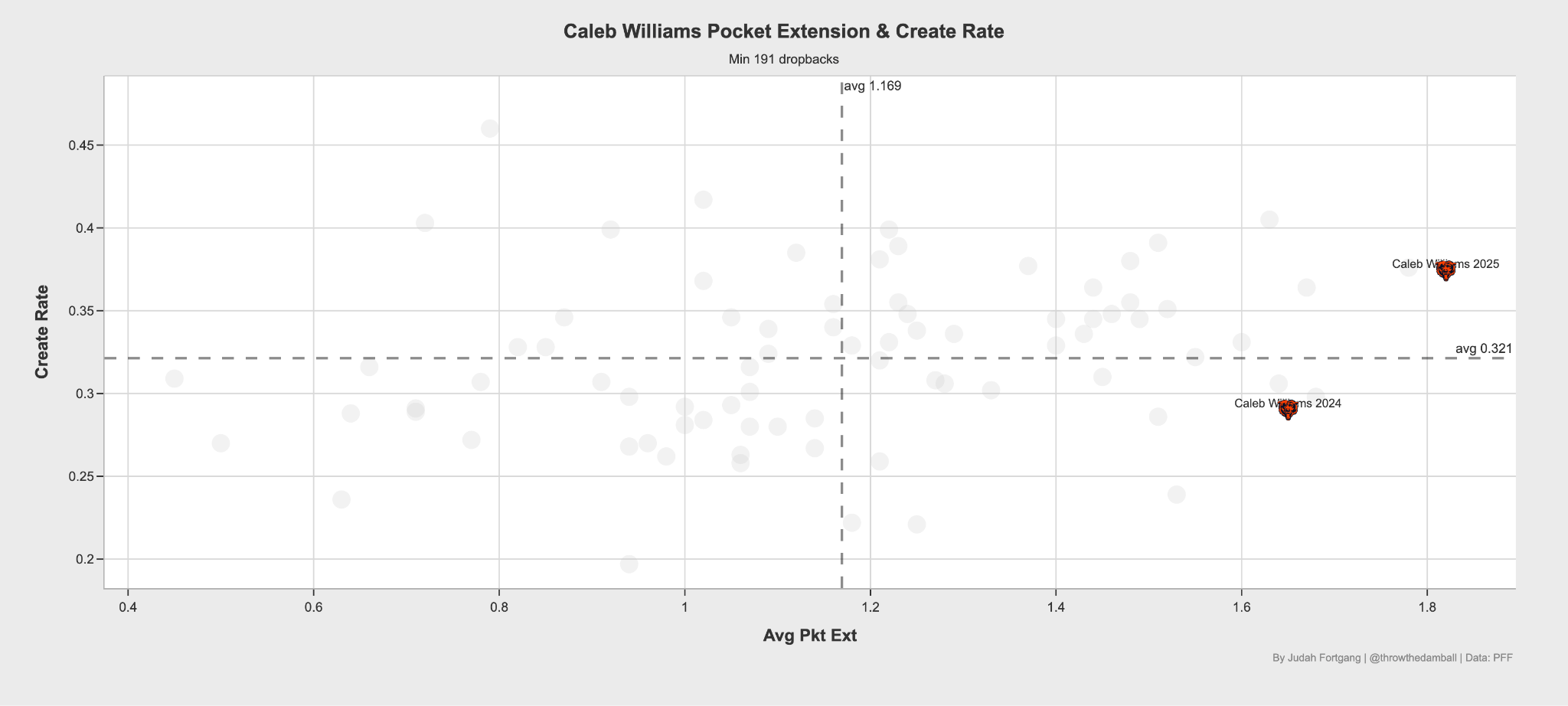
Now Williams style didn’t change much as he was already a terrific extender in year 1. But buying time alone is not enough. Buying time for sacks does the offense little good-- buying time to be able to create and evade sacks is where Williams went from well below to well above league average. And that as a whole, the skill improvement, led to massive improvements out of structure.
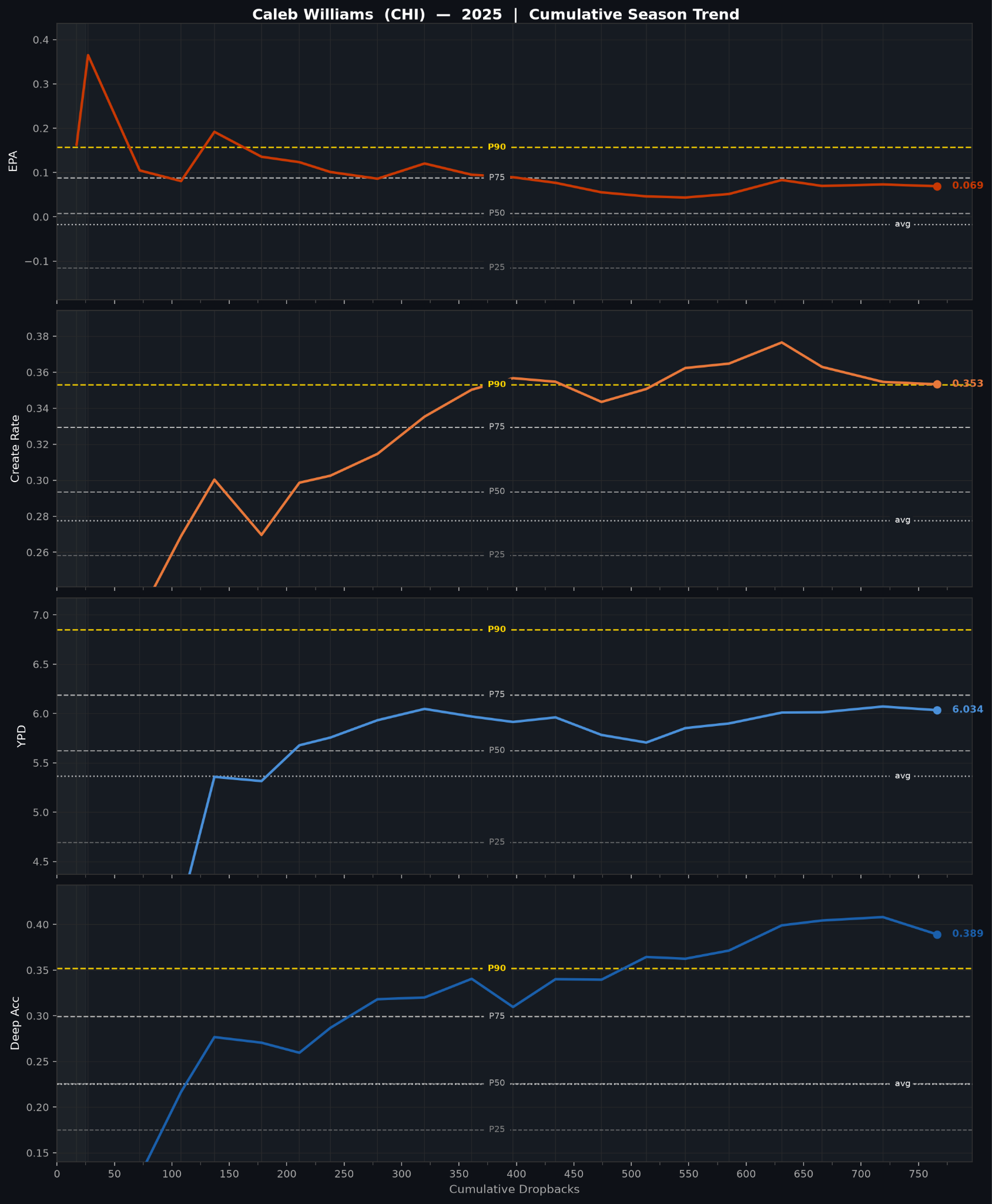
As the season wore along Williams settled into producing at a 75th percentile EPA and Yards Per Dropback clip, seeing massive improvements in his create rate and his deep accuracy. The deep game went from an area that was a major weakness—losing 5 points in total in his rookie season— to an area where Williams added 42 total points on nearly 0.42 points per play.
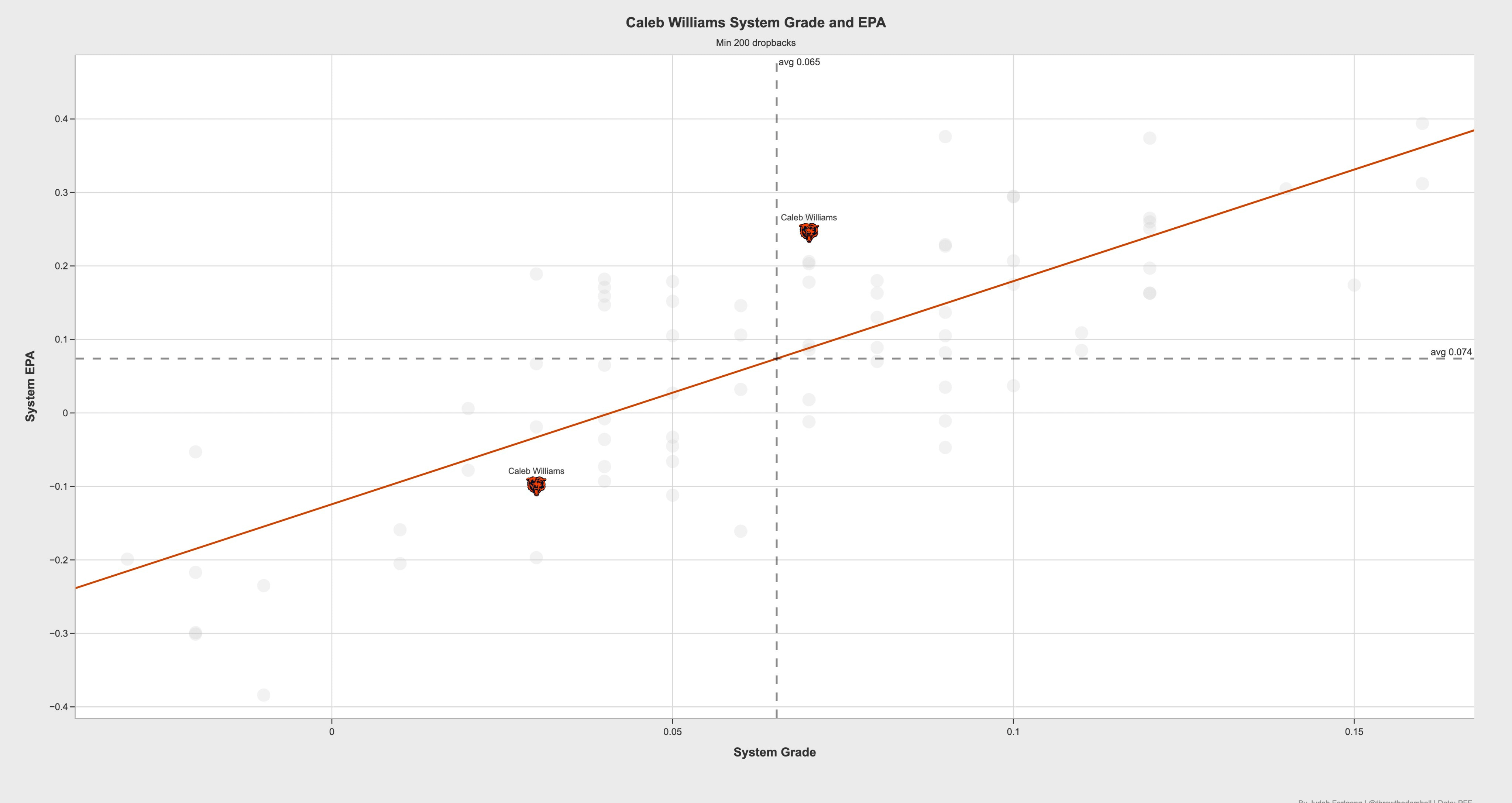
But the biggest jump perhaps was how well Williams was able to produce in system under Ben Johnson. Williams improved in his grade in system (throws to his first read and without a disruptive event), but despite being at league average in his PFF system grade--he produced far beyond that in his EPA at 6th best in the NFL. And that 0.25 EPA/Play number in system is a bit below where Jared Goff had been in each of the previous 2 years, suggesting a heavy Ben Johnson influence unlikely to go away.
Of course, life was also far easier for Williams with a run game under Johnson that was 2nd in Rush Success Rate and 6th in EPA/Play. Williams was in obvious passing situations on nearly 61% of play in his rookie season, compared to 47% in his sophomore year. Life under Johnson is far easier for a QB and I think that should remain sticky heading into 2026.
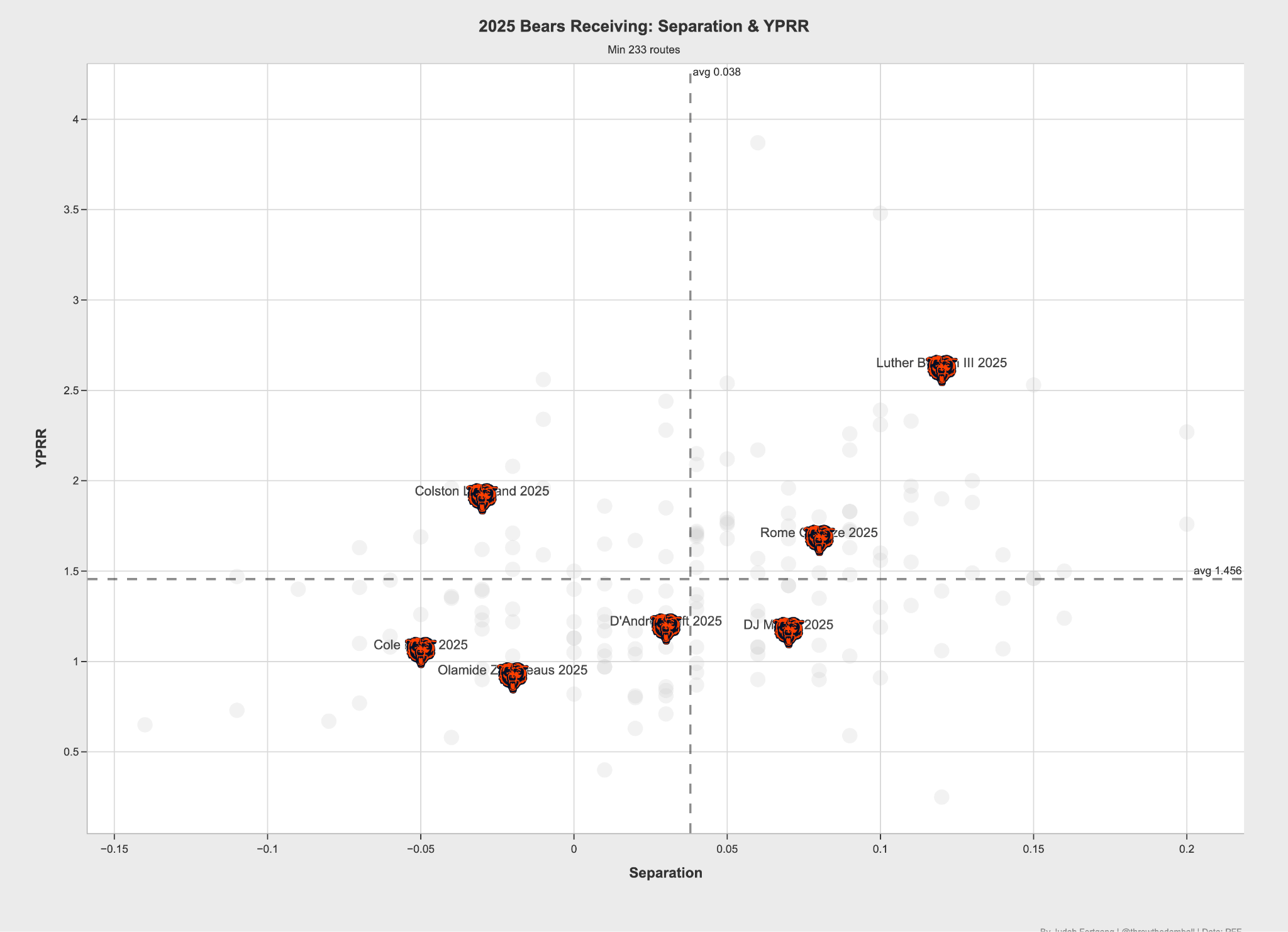
And it only helped in the second half of the season Luther Burden and Colston Loveland took on full time roles, both of whom were the leaders in YPRR for the offense. This is an offense that should be terrific and if Williams takes another leap from year 2 to year 3 especially in his ability to play in system, this is an offense with as elite a ceiling as any other in the NFL.
The problem for the Bears is a defense, that, excluding turnovers, was one of the very worst in the NFL.
